
Your US sales office for Karachi exporters
We help Karachi factories and trading houses sell to US buyers through an office in Chicago. Talk to us from SITE, Korangi or Port Qasim by phone, video or email, in English or Urdu.
Our work for Karachi firms:
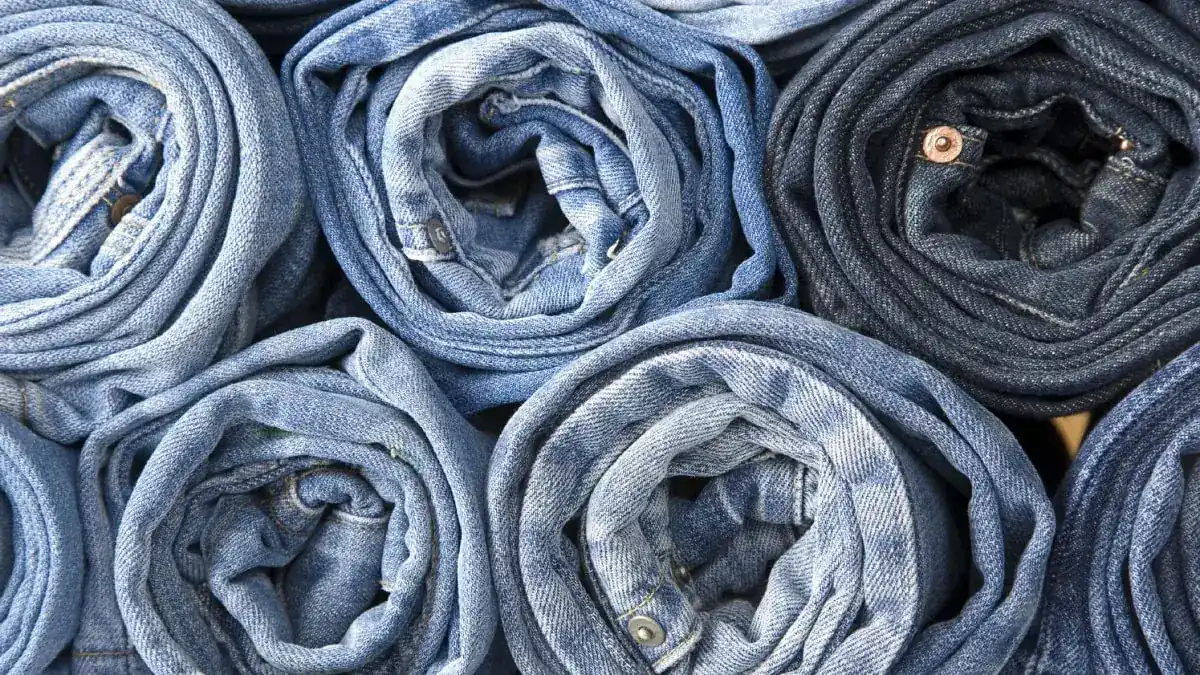
- US buyer outreach for your garments, denim, towels and leather
- A US company and Chicago address for trading houses too
- An English export catalog with US sizes and prices
- Packed rice, spices or salt sold on Amazon USA or Shopify
- Credit checks on new buyers before a container sails
- Replies to US buyers inside their working day
- Buyers pay you directly, not us
Run a Karachi mill or trading house? Tell us what you ship and get a US plan today.
Facts on this page were checked in October 2026. Sources are linked with each figure. Fiscal years in Pakistan run from July to June.
Export from Karachi to USA: the short answer
| Question | Answer |
|---|---|
| What is Karachi known for? | Pakistan's main port city and largest trading center. |
| What do Karachi companies export to the USA? | Garments and denim, home textiles, towels, leather goods, rice, spices and seafood. |
| Which ports do Karachi exporters use? | Port Qasim and Karachi Port for sea freight. Jinnah International Airport for air cargo. |
| How long does sea freight from Karachi to the USA take? | About 35 to 45 days to the US East Coast and 36 to 43 days to the West Coast, port to port, as of October 2026. |
| Can a Karachi trading company use your service? | Yes. We work with factories and with trading houses that export goods made by other factories. |
| Does Pak Export Partners buy Karachi goods? | No. We are your US sales partner, not a distributor. US buyers pay you directly. |
5 steps for Karachi exporters selling to US buyers
To export from Karachi to the USA, follow five steps: meet the US rules, prepare to sell, send samples, ship from the port and get paid safely.
- Check the US rules for your product. Rice, spices and seafood need FDA food facility registration and prior notice for each shipment. Garments, towels and bedding need US textile labels.
- Prepare to sell. Make an English catalog with US sizes and prices. A US company helps if you want to sell on Amazon or keep stock in the US.
- Send samples by air courier. Ship samples from Jinnah International Airport. From Pakistan, samples usually take one to three weeks to reach a US buyer, plus customs. See how to send samples to US buyers.
- Clear customs and load at the port. Your clearing agent clears export customs in Karachi. Your freight forwarder books space on a ship from Port Qasim or Karachi Port.
- Get paid safely. Ask a new buyer for an advance payment or a letter of credit. Check the buyer before you give credit. See how to get paid safely by US buyers.
Our guide on exporting to the USA from Pakistan explains each step in more detail.
Karachi export and port facts and figures
Karachi handles about 76 percent of Pakistan's exports, mostly through its two seaports.
| Figure | Value | Source |
|---|---|---|
| Share of Pakistan's exports that leave through Karachi | About 76 percent | Pakistan Single Window (PSW) assessment report, as reported by ProPakistani, 2024 |
| Port Qasim's share of Pakistan's exports | 40.4 percent | Pakistan Single Window (PSW) assessment report, as reported by ProPakistani, 2024 |
| Karachi Port's share of Pakistan's exports | 34.3 percent | Pakistan Single Window (PSW) assessment report, as reported by ProPakistani, 2024 |
| Karachi Port cargo capacity | More than 125 million tons a year | Business Recorder |
| Containers handled at Karachi Port, FY2025-26 | More than 2.65 million, counted in twenty-foot container units (TEU), a record | Associated Press of Pakistan (APP), June 2026 |
Which US buyers buy Karachi textiles, leather and food?
US clothing brands, home goods stores, importers and South Asian grocery distributors buy most of what Karachi exports.
Karachi's mills and factories make garments and denim, towels, home textiles and leather goods.
Its food companies pack rice, spices and seafood. Many Karachi trading houses also export goods made across Sindh and Punjab, from Himalayan salt to marble.
- Apparel and denim
- Home textiles
- Towels
- Leather goods
- Rice and food products
- Spices
- Carpets and rugs
- Marble and onyx
- Himalayan salt

What US rules apply to Karachi products?
Karachi's food exports need the most US paperwork, because the FDA must know the food facility before the food ships.
- Rice, spices and other foods: The facility must register with the FDA and name a US agent. Each shipment needs FDA prior notice. See FDA registration for rice and for spices.
- Garments, towels and bedding: Each item needs a label with fiber content, country of origin, maker and care instructions. See US textile labels.
- Leather goods: Words like "genuine leather" and "bonded leather" have set meanings in the US. See US rules for leather.
- US import duty: Goods from Pakistan pay the normal US duty for their tariff code, plus an extra 10 percent. The extra 10 percent is a Section 301 tariff, in force since July 24, 2026 (KPMG). A partial exemption for apparel and textiles covers only Bangladesh, Cambodia, Indonesia and Malaysia. Pakistan is not on that list. Ask a licensed customs broker to confirm the total rate before you quote a price. See our US customs and duties guide.
Where are Karachi's factories?
Karachi's factories are spread across six main industrial areas, from SITE in the west to Port Qasim in the east.
| Area | What is there |
|---|---|
| SITE (Sindh Industrial Trading Estate) | Karachi's oldest industrial estate, west of the city center. Textile, garment and food factories |
| Korangi Industrial Area and Landhi | Garments, towels, leather and the Korangi tannery area |
| Karachi Export Processing Zone, Landhi | A zone for factories that make goods only for export. The government's Export Processing Zones Authority runs it |
| North Karachi and Federal B Area | Garments, knitwear and small factories |
| Port Qasim industrial zone and Bin Qasim | Steel, food processing and large mills near the port |
| Hub Industrial and Trading Estate, across the Hub River in Balochistan | About 1,226 acres with Pakistani and foreign manufacturers. A Balochistan government body, the Lasbela Industrial Estates Development Authority, runs it |
How do goods leave Karachi for US ports?
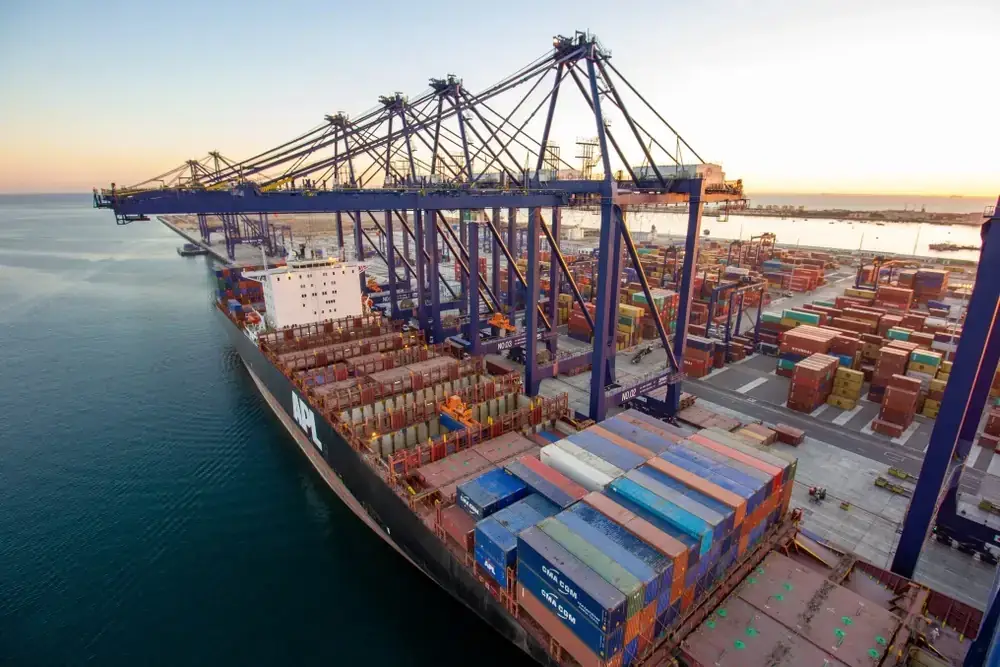
Karachi exporters ship straight from the city's two seaports, Port Qasim and Karachi Port, so there is no long road trip before the sea journey.
- Karachi Port: The Karachi Port Trust (KPT), a federal government body, runs the port. It reports to the Ministry of Maritime Affairs.
- Port Qasim: A separate port about 35 km east of Karachi Port. The Port Qasim Authority runs it.
- Sea to the US: Ships from Karachi take about 35 to 45 days to reach US East Coast ports such as New York and Savannah. Ships to Los Angeles or Long Beach on the West Coast take about 36 to 43 days. These are port-to-port times from Fluent Cargo schedules, as of October 2026. Door to door, plan for 35 to 50 days (ShipHub).
- Air: Samples and urgent orders fly from Jinnah International Airport.
- Gwadar: A third port, Gwadar in Balochistan, is run by China Overseas Port Holding Company under a 40-year contract. It handled less than 1 percent of Pakistan's sea trade in 2022-23.
Who runs Karachi's container terminals?
Private companies from Abu Dhabi, Hong Kong and Dubai run Karachi's container terminals under long contracts with the port authorities.
A terminal is the part of a port where ships load and unload containers. Your freight forwarder picks the terminal when it books your ship.
| Terminal | Where it is | Who runs it |
|---|---|---|
| Karachi Gateway Terminal (KGTL) | East Wharf, Karachi Port | AD Ports Group of Abu Dhabi, under a 50-year contract signed in 2023 (Dawn). It took over from Pakistan International Container Terminal |
| Karachi Gateway Terminal Multipurpose (KGTML) | East Wharf, Karachi Port | AD Ports Group, under a 25-year contract. It handles bulk and general cargo |
| Karachi International Container Terminal (KICT) | West Wharf, Karachi Port | Hutchison Ports of Hong Kong. Karachi's first container terminal, open since 1996 |
| South Asia Pakistan Terminals (SAPT) | Keamari Groyne, Karachi Port | Hutchison Ports. Its deep water lets very large container ships dock |
| Qasim International Container Terminal (QICT) | Port Qasim, about 35 km east of Karachi Port | DP World of Dubai |
Each terminal company pays the port authority a fee for every container it handles.
Where Karachi exporters can get local help
Karachi exporters can get local help from the city's chamber of commerce and from industrial and trade associations.
- Karachi Chamber of Commerce and Industry (KCCI)
- Korangi Association of Trade and Industry
- SITE Association of Industry
- Pakistan Tanners Association
- Rice Exporters Association of Pakistan (REAP)
We name these groups to help you find local support. Naming them does not mean we work with them.
Export from Karachi to USA: questions exporters ask
How do I start exporting from Karachi to the USA?
Start by checking the US rules for your product. Food needs FDA registration first. Then make an English catalog, send samples to US buyers and agree on safe payment terms.
Which port do Karachi exporters use to ship to the US?
Most sea shipments to the US leave from Port Qasim or Karachi Port. Your freight forwarder books the space. Your buyer or our partner customs broker clears the goods in the US.
How long does a ship from Karachi take to reach the USA?
About 35 to 45 days to East Coast ports such as New York and Savannah. About 36 to 43 days to Los Angeles or Long Beach. These are port-to-port times as of October 2026. Door to door, plan for 35 to 50 days.
How much US import duty do Karachi exports pay?
Each product pays its normal US duty rate plus an extra 10 percent Section 301 tariff on goods from Pakistan, in force since July 24, 2026. Ask a licensed customs broker to confirm the total rate before you quote a price to a US buyer.
Can you help a Karachi trading company, not a factory?
Yes. We work with factories and with trading companies that export on behalf of factories.