
This page was checked in October 2026. FDA rules and fees change, so confirm them before you act. We are not lawyers or FDA consultants.
FDA registration for surgical instruments: the short answer
| Question | Answer |
|---|---|
| Does a surgical instrument factory need FDA registration? | Yes, if your instruments are sold in the US. This includes instruments you make for a US brand under its name. |
| What is the FDA fee for surgical instrument makers? | $13,785 a year, for October 2026 to September 2027. |
| Do surgical instruments need FDA clearance (510(k))? | No, not usually. Most basic manual instruments are Class I and exempt from 510(k). |
| Can the FDA stop surgical instrument shipments from Pakistan? | Yes, unless your factory is on the FDA Green List. Steel medical instruments from Pakistan fall under FDA Import Alert 76-01. |
| When must surgical instrument makers renew FDA registration? | Every year, between October 1 and December 31. |
Get your instrument factory ready to ship to the US
Here is what we handle:
- Green List preparation with our partners, from the quality audit to the FDA review
- The right product code for every instrument you list
- Renewal reminders well before the December 31 deadline
- US hospital and distributor buyers through our surgical instruments sales service
- Partner costs quoted before any work starts
- First call free, in English or Urdu
- Your instruments, your prices, your final say
If you make instruments in Sialkot or anywhere in Pakistan, contact us now to start your Green List and FDA registration.
Who must register surgical instruments with the FDA?
The factory that makes the finished surgical instruments must register with the FDA and list them, even when a US company sells them. This is true if:
- You sell through a US distributor
- Your instruments carry a US company's brand
- You only make a few product lines for the US
If you make instruments for a US brand, agree in writing who registers what. Usually both of you register.
What is the FDA Green List (Import Alert 76-01)?
The FDA Green List names the Pakistani factories whose steel medical instruments are exempt from automatic port holds under Import Alert 76-01. This is the most important rule for Pakistani instrument makers. Under Import Alert 76-01, the FDA can hold every shipment of manual steel medical instruments from Pakistan at the US port, without checking it. Only factories on the FDA Green List are let through. This covers surgical and dental instruments.
To get on the Green List, the FDA asks for:
- Proof that your factory follows FDA quality rules
- Manufacturing to the good manufacturing practice (GMP) standard for surgical instruments set by the Surgical Instruments Manufacturers Association of Pakistan (SIMAP)
- A full review of your process, with tracking from raw steel to finished instrument
- A report from a third-party audit of your quality system, sent to the FDA device center for review
The FDA decides each case on its own. It can ask for new audits, and a failed audit can remove a factory from the list. Many US buyers ask about the Green List before they ask about price.
Do surgical instruments need FDA clearance (510(k))?
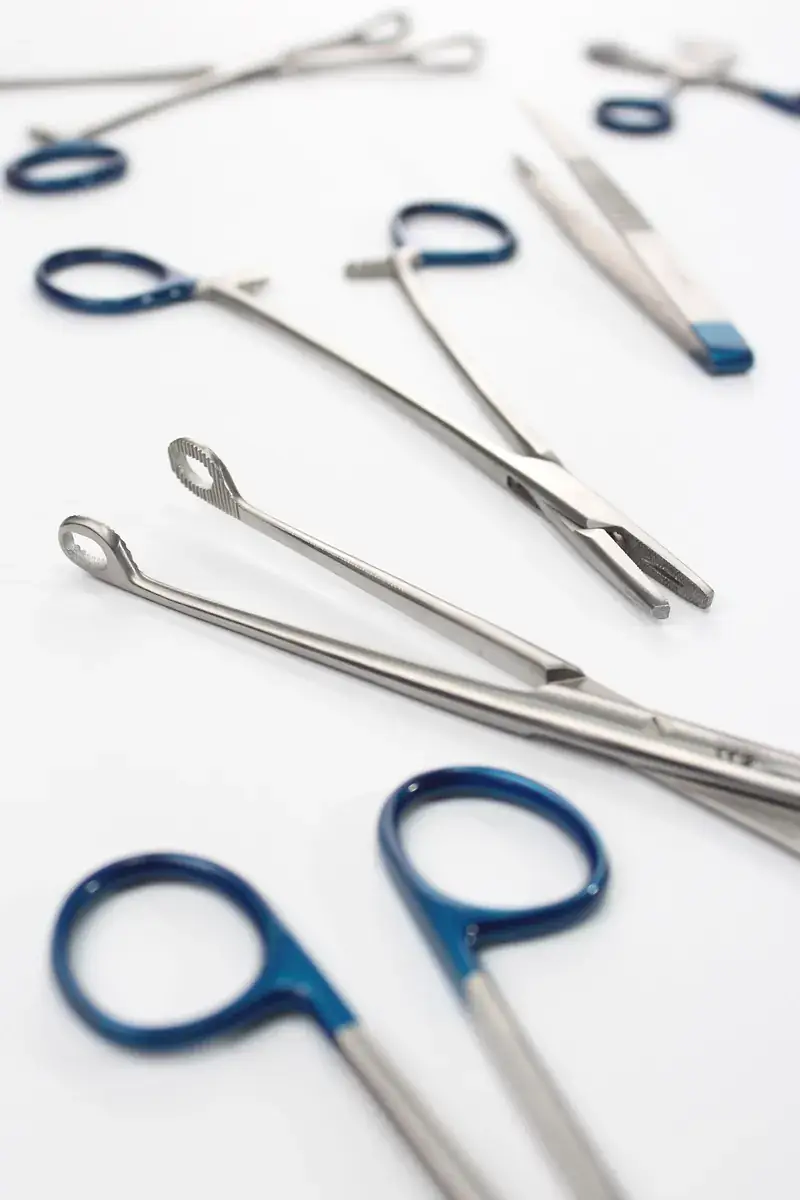
Most manual surgical instruments, such as scissors, forceps and retractors, are Class I devices that need no 510(k) clearance before sale. The FDA puts medical devices in Class I, II or III. Class I is the lowest risk. A 510(k) is a review the FDA does before some devices can be sold.
- Manual instruments for general surgery, such as scissors, forceps, needle holders and retractors, are Class I and do not need a 510(k).
- Instruments for special uses, such as eye, bone or ear, nose and throat (ENT) surgery, have their own FDA rules. Check each one.
- Powered instruments, implants and some specialty devices are Class II or higher and may need a 510(k).
- Check the product code for every item before you list it. One wrong code can hold a shipment.
A 510(k) review costs $28,653 in FDA fees, or $7,163 for a small business that qualifies (October 2026 to September 2027), according to the FDA fee notice for fiscal year 2027 (FY2027). See what a 510(k) file contains.
How do you register a surgical instrument factory with the FDA?
A surgical instrument factory registers in five steps: pay the yearly fee, name a US agent, register online, list each instrument and renew every year.
- Pay the yearly FDA fee online through the Device Facility User Fee (DFUF) system and keep the payment confirmation number.
- Name a US agent. The FDA checks with the agent before your registration is complete.
- Register your factory in the FDA Unified Registration and Listing System (FURLS).
- List each type of instrument you sell, using the FDA product code.
- Renew and confirm your listings every year between October 1 and December 31, as 21 CFR 807.22 requires.
Your registration is not complete until the fee is paid. The FY2027 fee notice says a factory is not legally registered until it pays. See our FDA registration renewal guide for the yearly steps.
Which FDA quality rules apply to surgical instruments?
Since February 2, 2026, the FDA's quality rule for medical devices, the Quality Management System Regulation, is built on ISO 13485:2016. ISO 13485 is the international quality standard for medical device makers. If your factory already holds ISO 13485, you are most of the way there.
- The rule applies even to instruments that need no 510(k).
- The FDA does not accept an ISO certificate in place of its own rules. It can still inspect your factory.
- The FDA can inspect your factory with or without notice.
- If you sell instruments sterile, buyers will ask for your sterilization records.
How must surgical instruments be labeled and marked?
Each surgical instrument must be permanently marked "Pakistan", and its label must name the maker or the US seller.
- US Customs requires each instrument to be permanently marked with "Pakistan", by etching or stamping. A sticker is not enough.
- Labels must show the name and address of the maker or the US company selling it.
- Do not write "FDA approved" or use the FDA logo.
See our US labeling guide for the full rules.
What mistakes delay FDA registration for surgical instruments?
The most costly mistakes are shipping before Green List approval and missing the December 31 renewal.
- Shipping before your factory is on the Green List
- Missing the December 31 renewal
- Listing instruments under the wrong product code
- Paying for a "certificate" the FDA never issued
How we help
We are not an FDA consultant. US regulatory firms and US agents do the filings and the Green List paperwork, and we keep the work moving. For US buyers and commission, see surgical instruments export to USA. If your factory is in Sialkot, see our full service for Sialkot makers.
Ready to sell surgical instruments in the US?
Get FDA registration in place, then let us introduce your instruments to US distributors and private label brands.
More FDA registration guides for medical products
 FDA registrationDental instruments
 FDA registrationMedical disposables
 FDA registrationFDA registration for Pakistani exporters
FDA registration for surgical instruments: questions exporters ask
How much does FDA registration cost for surgical instruments?
The FDA fee is $13,785 a year for October 2026 to September 2027. Consultant and US agent fees are extra.
Do I still register if I sell through a US distributor?
Yes. Your factory must be registered and your instruments listed, even if a US company imports them.
What is the FDA Green List for Pakistani instruments?
It is the list of Pakistani factories whose instruments the FDA lets through. Instruments from factories not on it can be held at the US port under Import Alert 76-01.
Is there a small business discount on the yearly fee?
No. Small businesses pay the same $13,785. The FDA may waive a later yearly fee, never the first one, for a firm with $1 million or less in sales if paying would cause financial hardship. The FDA does not have to grant it.
Can I say my instruments are FDA approved?
No. Registration is not approval. Saying so can get your goods held.