
This article was checked in September 2026. Rules and figures change, so confirm them before you act. We are not lawyers or tax advisers.
The short answer
| Question | Answer |
|---|---|
| Is the US a good market for Pakistani goods? | Yes. The US bought $5.76 billion of goods from Pakistan in 2025, more than any other country. |
| What are the main steps? | Check US rules, work out landed cost, set up a US presence, find buyers, ship correctly and get paid safely. |
| Do I need a US company? | Not always, but it helps with buyers, payments, online stores and importing stock. |
| What changed in 2026? | Tariffs changed several times and duty-free small parcels ended. Always check the current rate before you quote. |
Key takeaways
- Check US rules for your product before you make samples.
- Quote prices on clear terms, such as FOB Karachi, and know your landed cost.
- Answer US buyers the same US day and follow up.
- Never ship a first order on open credit to an unchecked buyer.
Exporting to America is not hard, but it has more steps than most exporters expect. Missing one, such as a label or an FDA registration, can leave your container stuck at a US port. Here is the full path.
Step 1: Check that your product can be sold in the US
Every product type has its own US rules. The main ones for Pakistani exporters are:
- Food, spices, rice and dry fruits: FDA facility registration, a US agent and prior notice for every shipment. See our FDA guide.
- Surgical and dental instruments: FDA medical device registration and listing.
- Textiles and clothing: fiber content, origin and care labels.
- Children's products: third-party lab testing and a Children's Product Certificate.
- Knives, scissors and instruments: permanent country of origin marking on the item.
- Wood furniture and crafts: often a Lacey Act declaration.
Our US labeling guide covers these in more detail.
Step 2: Work out your landed cost
US buyers compare suppliers on the full cost of getting goods to their warehouse. That landed cost includes:
- Your factory price (FOB Karachi or another Pakistani port)
- Sea or air freight and insurance
- US customs duty, based on the product's tariff code
- US customs fees and your customs broker's fee
- Trucking from the US port to the buyer
US tariff rates have changed often in recent years. Always check the current rate for your product with a licensed customs broker before you quote. Our customs guide explains how duty works.
Step 3: Decide how you will sell
There are three main ways to sell Pakistani products in the US. Many exporters use more than one.
- Wholesale: sell containers or cartons to US importers, distributors and retailers.
- Your own online store: sell to US customers through Shopify.
- Marketplaces: sell on Amazon USA and similar sites.
Step 4: Set up your US presence
US buyers trust suppliers they can reach easily. A US presence usually means:
- A US company with an EIN, if you want to import, sell retail or take US payments
- A US business address and phone number
- An English website and catalog with US sizes and prices
- A US bank account, where it makes sense
Step 5: Find buyers
Build a list of US companies that already import your product, contact them with a short email and a catalog link, and follow up. Our guide on how to find US buyers explains where to look.
Step 6: Agree terms and payment
Agree on the price, the shipping term (such as FOB or CIF), the delivery date and the payment method in writing. For new buyers, ask for an advance payment or a letter of credit. See how to get paid safely.
Step 7: Ship
Your freight forwarder books the shipment. For sea freight, the importer must file an Importer Security Filing with US Customs before the goods are loaded in Pakistan. When the goods arrive, a licensed customs broker files the customs entry for the importer, who pays the duty.
Step 8: Get paid and bring the money home
Your buyer pays by bank transfer, letter of credit or another agreed method. Pakistani exporters must bring export money home under State Bank of Pakistan rules, so talk to your bank about how this works for your business.
Need a hand?
We do steps 3 to 8 for Pakistani exporters from our Chicago office. See how it works or our prices.
What changed in 2026
| Rule | What it means for you | Who is in charge |
|---|---|---|
| IEEPA tariffs struck down | In February 2026, the US Supreme Court ruled that the IEEPA law does not allow these tariffs. The 19 percent reciprocal tariff on Pakistani goods stopped. | US Supreme Court and CBP |
| Temporary 10 percent surcharge | A 10 percent global surcharge under Section 122 applied from February 24 to July 24, 2026. | US government and CBP |
| Rates after July 2026 | New tariff actions followed. Rates can change at short notice, so get the current total from a licensed customs broker before you quote. | CBP |
| Small parcels | The $800 duty-free rule for small parcels is suspended for all countries, and US law ends it on July 1, 2027. | CBP |
The Pakistani side of every export
| Rule | What it means for you | Who is in charge |
|---|---|---|
| Registration | You need an NTN, a business bank account and a Pakistan Single Window (PSW) account. Many goods also need a certificate of origin. | FBR, PSW and your chamber |
| Export declaration | For every shipment you file an undertaking and declaration in PSW confirming the full value. | PSW and your bank |
| Bringing the money home | Export proceeds must reach your bank in Pakistan within the State Bank of Pakistan time limit. | State Bank of Pakistan |
Where Pakistani goods leave from
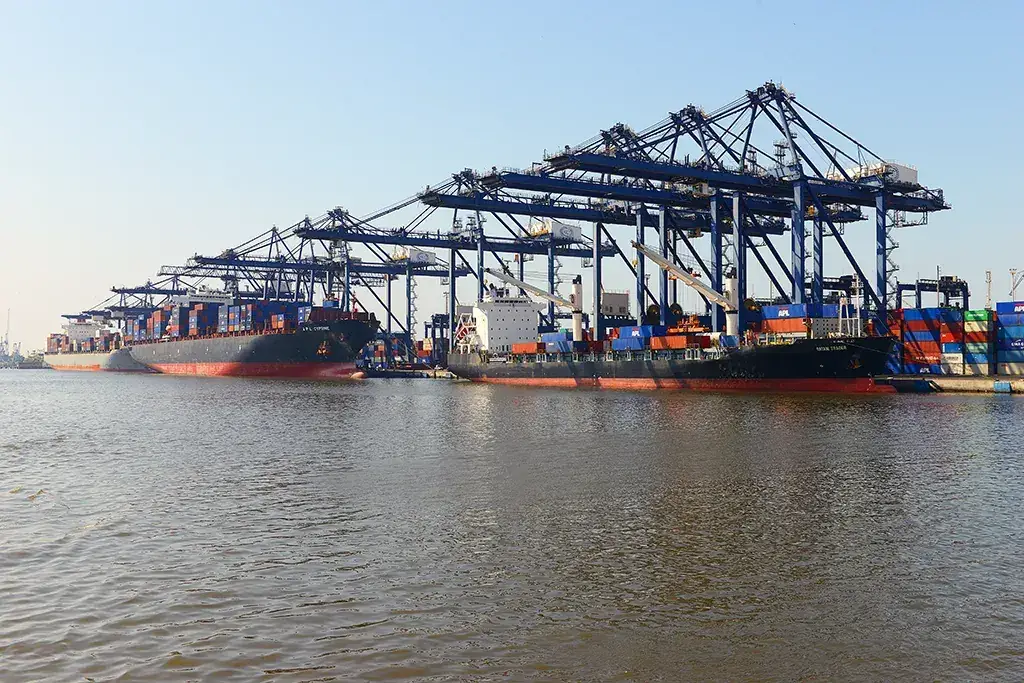
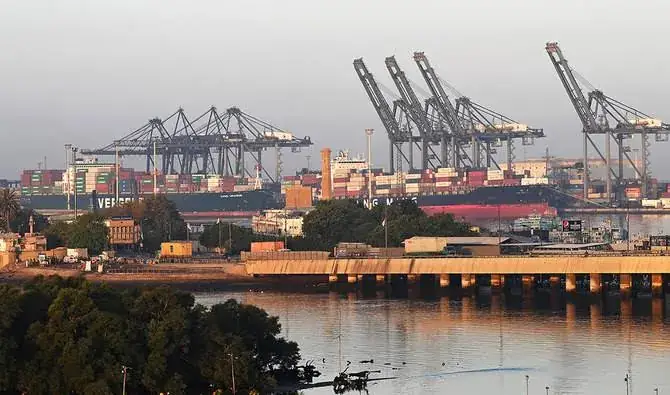
About 76 percent of Pakistan's exports leave through Karachi's two seaports: Port Qasim (40.4 percent) and Karachi Port (34.3 percent), according to a Pakistan Single Window assessment reported in 2024. Inland exporters clear customs at dry ports in Lahore, Sialkot or Faisalabad and send sealed containers south. See our Karachi page for the terminals and who runs them.
Want us to handle this for you?
We are a US office in Chicago for Pakistani exporters. We set up your US company, build your website and find US buyers. You sell to them directly.
Keep reading
 Getting startedFind US buyers for Pakistani products
 Getting startedGet paid safely by US buyers
 Company, tax and bankingRegister a US company from Pakistan
Common questions
Do I need a US company to export to the USA?
No. Many exporters sell to US buyers who import the goods themselves. A US company helps if you want to import stock, sell on Amazon or Shopify, or take payments as a US business.
How long does it take to start exporting to the US?
Setup can take a few weeks. Finding steady buyers usually takes a few months, because buyers test samples and small orders first.
What is the easiest product to export from Pakistan to the US?
Products without special US rules, such as many textiles, leather goods and home decor, are easier to start with than food or medical devices.
How long does it take to start exporting to the US?
Company setup and a website take weeks. First wholesale orders usually take a few months, because US buyers test samples and small orders first.
Which Pakistani products sell best in the US?
Home textiles, garments, towels and knitwear are the largest. Surgical instruments, sports goods, leather goods, rice and Himalayan salt also sell well.